
Dribble Bar Slurry Spreading: How Precision Application Boosts Yields and Cuts Costs


If you are still spreading slurry with a splash plate, you are throwing nitrogen into the air and paying for it twice. Dribble bar slurry spreading has moved from “nice-to-have” to standard practice on many UK dairy and beef units because it delivers better nutrient use, fits with tougher regulations and, when used properly, pays its way.
A dribble bar is a low-emission applicator. Instead of blasting slurry into a fine mist, it feeds slurry through a macerator and down multiple flexible hoses, laying it in narrow bands just above the soil surface. By lowering the trajectory and reducing the surface area exposed to the air, you cut ammonia losses and keep more of the slurry’s nitrogen in a form the crop can actually use.
For the grass, that shift is huge. Low-emission methods such as dribble bars, trailing shoes and injection consistently lose far less nitrogen at application than splash plates. In practical terms, dribble bar slurry spreading means more grass from the same number of loads, better response after first and second cuts and a real chance to trim back bagged nitrogen where slurry is planned in as part of your fertiliser strategy.

Dribble bars “band spread” slurry in rows on the soil surface instead of coating the whole leaf. That reduces contamination and protects silage quality. Because the crop isn’t smothered, you can spread on higher covers, which gives you more flexibility around the weather and the silage schedule.
Timing is just as important as technology. Slurry should be applied in cool, moist conditions when crops can use the nitrogen and when ammonia losses are naturally lower. Dribble bar slurry spreading supports this by being lower-trajectory and less odorous than a splash plate. You gain more workable days, face fewer complaints about smell and have a better chance of hitting those “golden windows” in early spring and after cuts when slurry really earns its keep.

All of this feeds directly into the farm’s bottom line. Low Emission Slurry Spreading Equipment increases the amount of nutrients available for crop growth while reducing what is lost to air and water. Dribble bars substantially cut ammonia losses compared with conventional methods and make it easier to match slurry to crop demand in your nutrient management plan. If you keep more nitrogen in the field and reduce bagged fertiliser where slurry is used, the saving shows up in your fertiliser bill.
Nutrient management plans rely on knowing what nutrients are in your slurry and how much you are applying per hectare. With dribble bar slurry spreading, those assumptions become solid numbers. Once you know what is in the tank and how evenly it is going on, you can target high-value fields, reduce purchased nitrogen and still hit yield and quality targets, backed up by records that satisfy Nitrate Vulnerable Zone and assurance scheme requirements.
From the operator’s seat, “precision” in dribble bar slurry spreading is not a buzzword; it is a practical change in how the job runs. A well-matched Spreadwise dribble bar on a tanker or umbilical system allows you to set a target application rate in cubic metres per hectare and achieve it consistently using macerator flow, pump output and forward speed. Because the macerator distributes slurry evenly to each outlet and the boom width is fixed, you can work in clean, repeatable bouts, usually following tramlines or GPS guidance. Heavy overlaps, missed strips and slurry creeping into gateways and margins become far less likely.

The paperwork gets easier too. When you know the application rate and working width and you have a recent slurry analysis, converting loads to kilograms of nitrogen per hectare is straightforward. Those figures can drop straight into NVZ records, nutrient plans and carbon audits. Instead of guessing, you can prove how much organic nitrogen you have applied to each field and show that purchased fertiliser has been adjusted to take that into account.
Dribble bars also change the feel of the job in the field. They are generally lighter than trailing shoes for a given width, and lower-dry-matter slurry flows more easily through this kind of equipment. That can reduce power requirement and improve performance in softer conditions. Operators typically report better visibility, a cleaner rear window and a more predictable spreading pattern on undulating ground than they get with a splash plate.
Overall, dribble bar slurry spreading helps you keep more nitrogen in your fields, improve forage quality, strengthen compliance and make life in the cab easier.
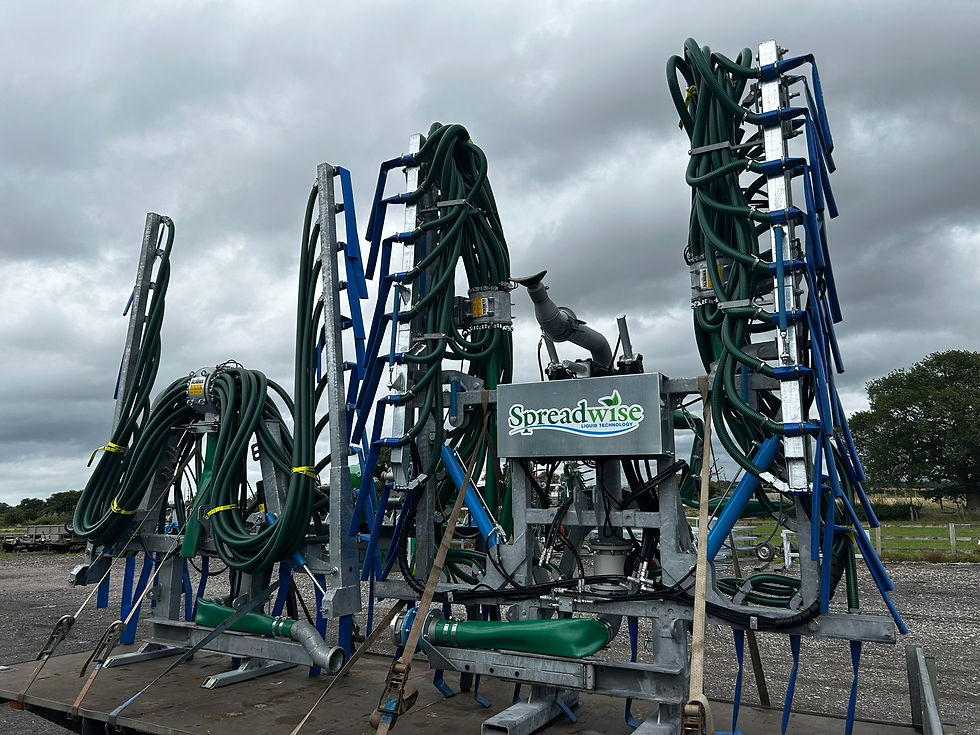
To turn that into a practical upgrade on your own farm, you need kit that fits your system. Spreadwise offers a comprehensive dribble bar product range for both tanker-mounted and umbilical applications, alongside macerators, flow-control options and complete slurry handling systems. You can specify a boom width, hose spacing and mounting arrangement that works with your existing tankers and pumps rather than trying to bend your system around the equipment.
If you want to capture more of your slurry’s nutrient value, cut fertiliser costs and stay ahead of tightening regulations, look seriously at dribble bar slurry spreading. Contact our team to talk through your current slurry set-up, choose the right boom width and specification and plan a low-emission slurry strategy that works for your farm.
Have you secured your FETF 25 grant funding? Secure your equipment for 2026 by speaking to our team today.


Comments