
How to Maximise the Nutrient Value of Slurry for Crops
- Spreadwise

- Jul 29, 2025
- 3 min read
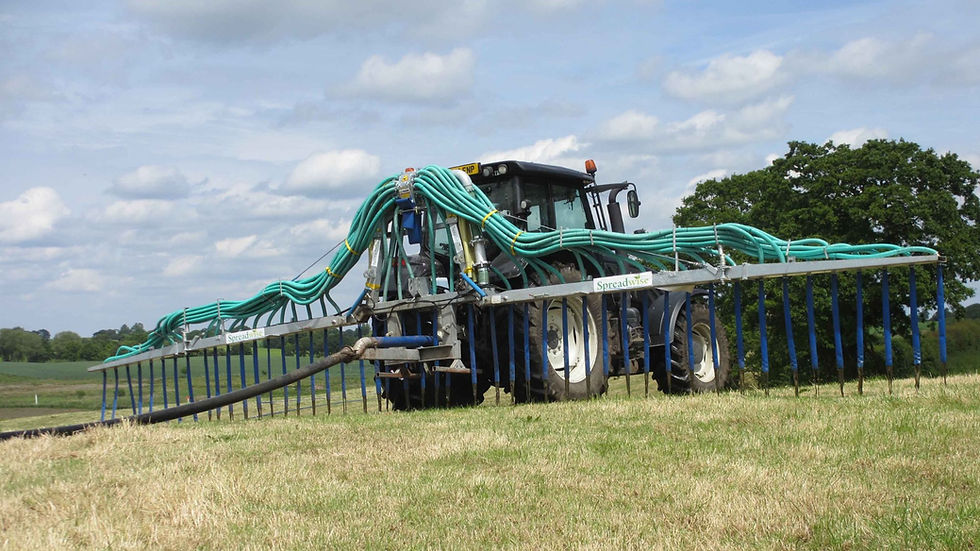
Slurry has long been one of the most valuable by-products on the farm — not just a waste management challenge, but a powerful, nutrient-rich fertiliser. With the rising cost of artificial inputs and growing environmental pressure, getting the most from your slurry isn’t just good practice — it’s smart business.
Know What’s in Your Slurry
Every farm’s slurry is different — and knowing what’s actually in your tank is essential if you want to apply it efficiently. Slurry contains valuable nutrients like nitrogen (N), phosphorus (P), and potassium (K), but these levels can vary depending on livestock, feed, and how the slurry is stored.
Having your slurry tested at least once a year is a great starting point. However, for reliable results, the slurry must be thoroughly mixed before sampling. That’s why many farmers rely on effective agitation systems to ensure a consistent slurry mix ahead of testing and spreading.
Apply at the Right Time
Timing plays a crucial role in nutrient retention. Apply at the wrong time and a large proportion of the slurry’s nitrogen can be lost to the air as ammonia — especially in hot, dry, or windy conditions.

The most effective window is typically spring or early autumn, when conditions are cooler and damp, allowing crops to absorb more nutrients with minimal losses. Being ready to act during these optimal weather windows is key — and having the right kit on-hand makes a big difference. Our umbilical systems and tankers are designed for fast, efficient spreading, helping farmers react quickly when conditions are right.
Use Efficient Spreading Techniques
The way slurry is applied can significantly influence how much of its nutrient content reaches the crop. While traditional splash plates remain in use, they often result in uneven application and greater nutrient loss. Modern application systems — such as trailing shoes, dribble bars, and injection systems — offer a more precise and environmentally friendly alternative. These methods deliver slurry closer to the root zone, reduce surface runoff, and dramatically cut down ammonia emissions.
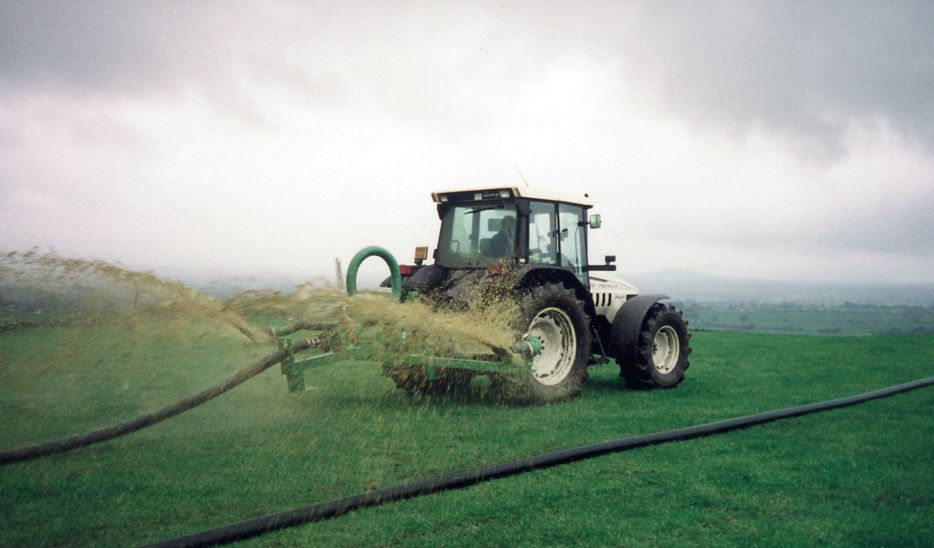
We design and manufacture a full range of these systems, with options to suit both tankers and umbilical setups. Whether you’re looking for wider application widths, adjustable controls, or shallow injection, our equipment is built to help improve your nutrient use efficiency and meet environmental standards.
Keep It Mixed and Manage Storage
Slurry stored over time naturally separates into solids and liquids. This can lead to inconsistent spreading and unpredictable nutrient levels unless it’s properly mixed before application. Regular stirring ensures that nutrients are evenly distributed throughout the tank.

We can provide robust hydraulic mixers and slurry agitators that help make this task quicker and more effective, reducing the risk of uneven application. For farms dealing with high volumes or specific nutrient planning goals, slurry separation systems can also be beneficial. These allow the solid and liquid fractions to be managed independently, offering more targeted application and reduced storage pressure.
Match Application to Crop Needs
Crops vary in their nutrient demands and sensitivity to slurry. For example, grassland responds well to early spring applications or post-cut spreading, while cereals benefit from pre-drilling applications or those timed early in their growth stages. Forage crops like maize often benefit from slurry injection before sowing.
The key is flexibility — having the right tools to match your application to what each crop needs, when it needs it. Our equipment is designed with this in mind, offering variable flow control, accurate placement, and compatibility with a wide range of field conditions and crop types.

From Waste to Resource
Slurry is far more than just a waste product — it’s a valuable fertiliser resource that can cut input costs and improve soil health when used properly. By understanding your slurry’s nutrient content, spreading at the right time, using modern application methods, and tailoring your approach to your crops, you can unlock its full potential.
At Spreadwise, we’ve spent over 30 years helping UK farmers improve their slurry management. From mixers and pumps to dribble bars, separators and full application systems, our equipment is designed to make slurry work harder for your land and your business.
If you’re ready to get more from your slurry, contact our team today to see how we can help maximise your slurry management.


Comments